Crisis communications simulation Rehearse the first hour of a reputational crisis.
A live crisis communications exercise for communications, legal and leadership teams. A simulated social media feed, inbox and news cycle turns on your organisation, misinformation outruns your approval chain, and every statement your team publishes is timed and fact-checked.
Built from your organisation’s own risks, approval chain and critics. Based in Singapore.
- Participants
- Up to 25
- across five teams
- Live
- 90–180
- minutes, plus a debrief
- Checked
- Every
- public statement
What your team is up against
Six sources of pressure, all live at once
Each participant works a simulated desktop or phone. Nothing is a screenshot on a wall: posts arrive while a window is open, mail lands with a badge, and coverage can change under someone who is reading it.
01
A social media pile-on
Two simulated social media platforms, one feed-and-comments and one short-post, where hostile accounts respond to what your team actually says rather than to a script.
02
Misinformation that outruns the truth
False claims gather engagement in real time. Your team can report them, but a report only scores well if the cited fact actually disproves the claim.
03
Journalists with deadlines
Reporters email specific questions with a publishing time attached, and run the story whether or not you reply.
04
Coverage you can dispute
A news masthead publishes about your organisation, and your team can formally dispute what it gets wrong.
05
An approval chain under strain
Comms and legal argue it out in the team chat. Statements are drafted, submitted for approval and published, and skipping a step is recorded as a breach.
06
Stakeholders who want answers
Partners, donors and regulators write in too, several with deadlines of their own.
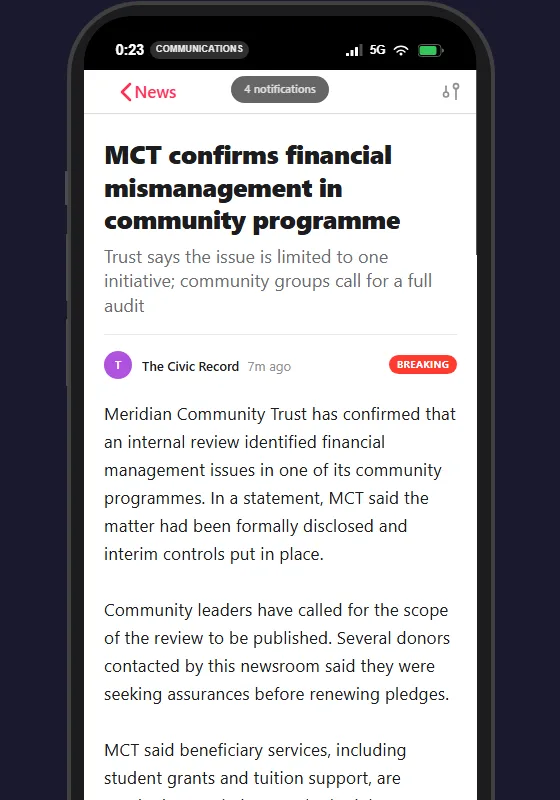
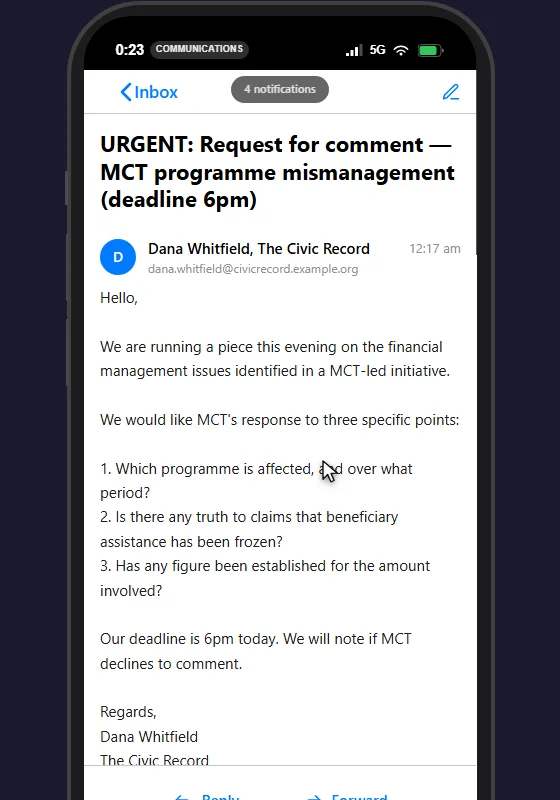
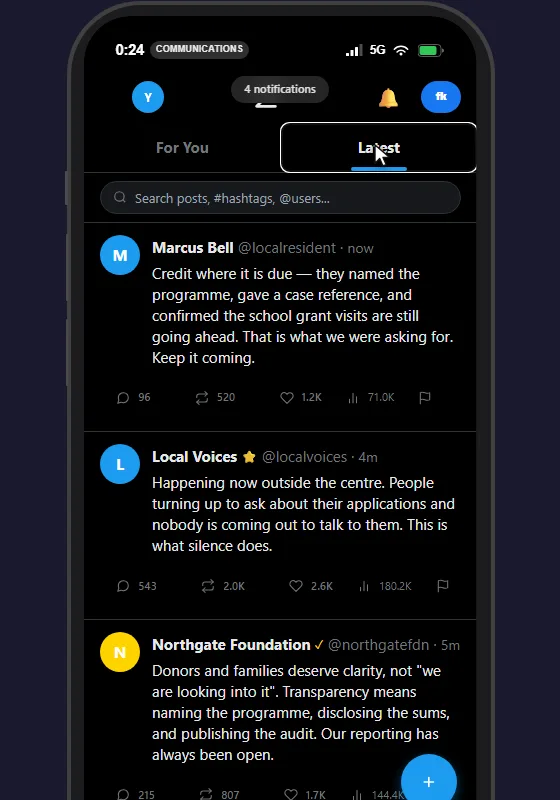
Recordings of a delivered exercise · scenario content is simulated
What gets scored
Every statement is timed, checked and recorded
The exercise is measured while it happens. By the time the room sits down for the debrief, the record exists and nobody has to defend their memory of it.
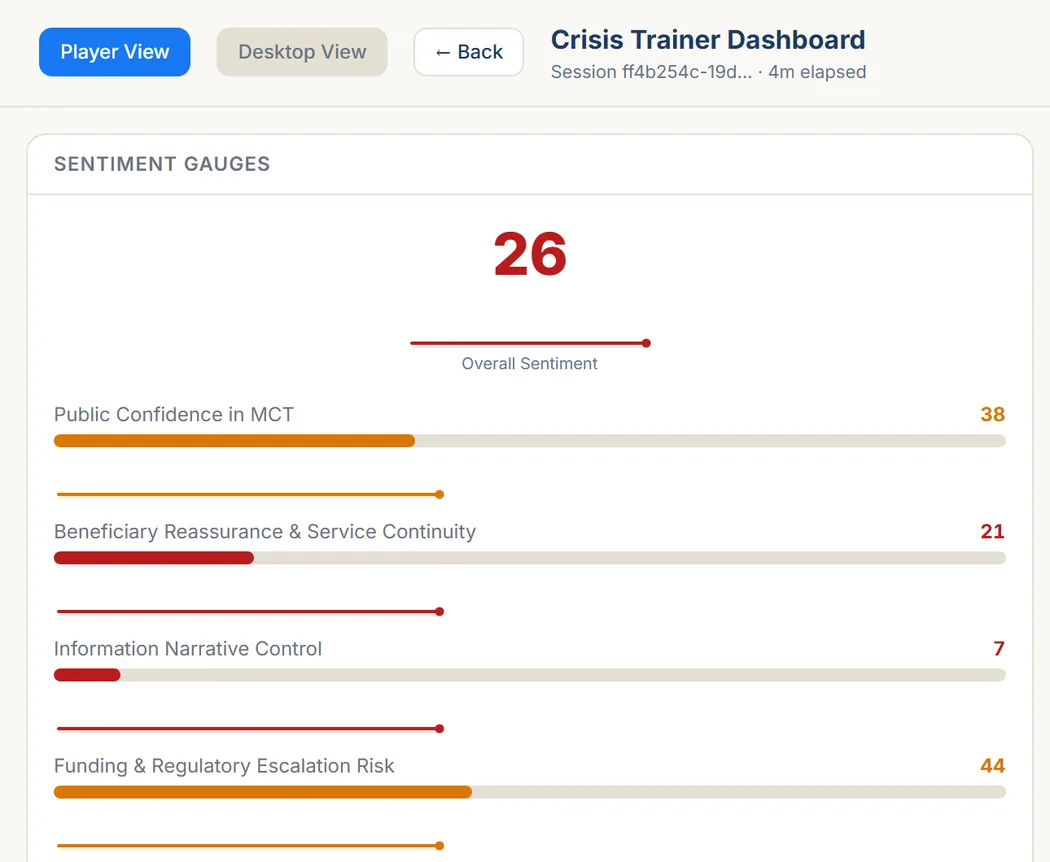
Speed
Time to first response
And time to an official, verified statement. Measured from when the question became answerable, not from when someone noticed.
Substance
Every statement fact-checked
Graded against the scenario’s own fact sheet. Confirming a figure nobody has verified costs you, whether or not it turns out to be right.
Precision
Reports and disputes
Right category, supportable reason. Flagging everything that annoys you is scored as the failure mode it is.
Discipline
Protocol adherence
Draft, approve, publish. Skipping a step is recorded as a breach at the moment it happens, with the artefact attached.
Versus traditional training
Beyond media training and paper tabletops
Media training prepares a spokesperson for an interview. A tabletop exercise talks through a plan. Neither puts the whole communications function on the clock at once.
Media training
Coaches one spokesperson for interviews and press conferences. Valuable, but it does not test monitoring, approvals or how long the first statement takes.
Paper tabletop exercise
Talks through the plan with printed posts and emails. Nothing moves until the facilitator moves it, and the debrief relies on what people remember.
Crisis communications simulation
The whole function works live: monitoring, drafting, legal review, publishing and rebuttal, against a feed that reacts to what they say, with every decision scored.
Running one
Built on your organisation, not a template
The exercise is built from your own risk register, approval chain and critics, and your team validates the scenario before it runs.
Nothing about it is public, nothing touches a live platform, and no member of the public can see or interact with any of it.
- Who takes part
- Communications, legal, stakeholder management, partnerships and whoever actually signs off a public statement. Up to 25 people across five teams.
- How long
- Ninety minutes to three hours live, plus a debrief. Build takes two to three weeks from the scoping call.
- What you need
- A browser each. No installation, no VPN, and it runs as well with everyone remote as it does in one room.
- What you leave with
- A scored report you can put in front of a board, the full decision timeline, and a short list of the procedural gaps the exercise found.
Questions
What communications teams ask first
What is a crisis communications simulation?
A live exercise in which your communications, legal and leadership people respond to a fictional crisis as it unfolds across simulated social media, email and news. The situation reacts to what they publish, and every decision is timed and scored for the debrief.
How is it different from media training?
Media training prepares a spokesperson for interviews. A crisis communications simulation tests the whole function at once: monitoring, drafting, legal review, approval and publishing, under time pressure and in public view.
Who should take part?
Communications, legal, stakeholder management, partnerships and whoever actually signs off a public statement. Up to 25 people across five teams.
Does anything get posted publicly?
No. The social media platforms, inboxes and news outlets are all simulated inside the exercise. Nothing a participant posts can reach the public internet or a real system.
Can the scenario reflect our real risks?
Yes. It is built from your own risk register, crisis plan and approval chain, and kept fictional and non-operational, so it resembles your exposure closely enough to be uncomfortable without documenting a real vulnerability.
Do you run crisis communications exercises in Singapore?
Yes. Prophyion is based in Singapore. Exercises run in a browser, so your team can take part in one room or across offices in several countries.
Find out how long your first statement really takes
Tell us which crisis worries you most and we will come back with a scenario outline and a recommended format.